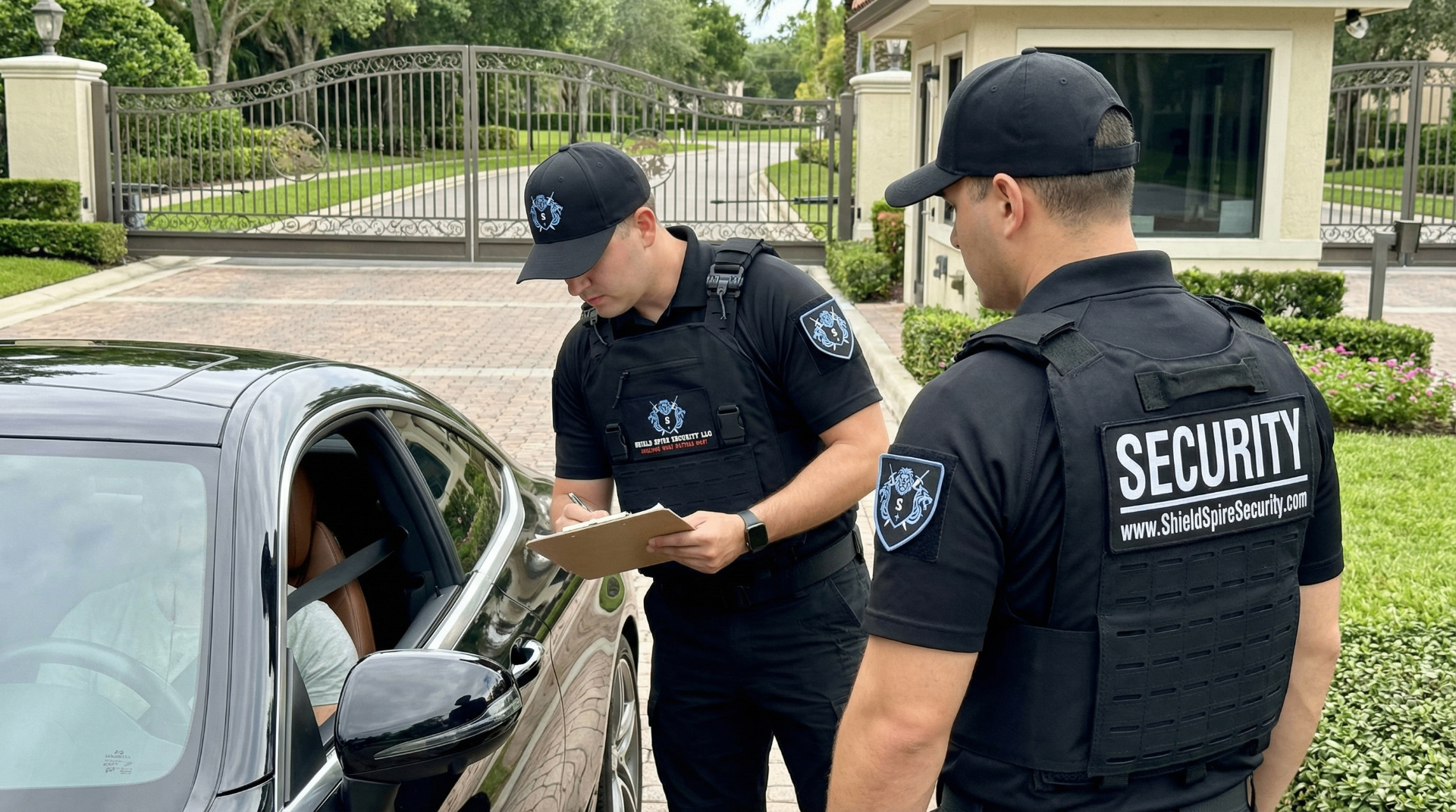
Security for a place people are trying to feel at home in
A residential community is the one environment where the people being protected also live with the protection. Coverage that feels heavy-handed is a complaint at the next board meeting; coverage that is invisible is a line item nobody can justify. Shield Spire scopes community security around presence, access and documentation the board can actually show.
What a community actually needs covered
Residential exposure is spread thin across a large area and concentrated at a few predictable points: the entrance, the amenities and the hours after midnight. The work is regular, visible presence — and a record that shows it happened.
- Entrances and gates used by residents, guests and vendors
- Streets, cul-de-sacs and common areas across a wide footprint
- Pools, clubhouses and amenity buildings with posted hours
- Resident and guest parking, including overnight
- Package deliveries and contractor access during the day
- Overnight hours when the community is quiet and unlit
Operational considerations
These are the conditions that most often shape a community security scope — and the coverage that answers each one.
- The gate is open, broken or unattended
- How coverage answers itA staffed gate post during defined hours, or scheduled patrol coverage of the entrance
- Amenities are used after posted hours
- How coverage answers itPatrol passes timed to amenity closing, with observations documented for the board
- Residents report vehicle break-ins overnight
- How coverage answers itVisible patrol on an irregular pattern through parking areas and streets
- Vendors and contractors come and go all day
- How coverage answers itAccess observation at the entrance against the rules the association sets
- The board cannot show residents what they are paying for
- How coverage answers itGPS-verified patrol timing and written activity reports suitable for a board packet
- A dispute between residents escalates
- How coverage answers itCalm de-escalation and escalation to management and law enforcement — never adjudication by the officer
How coverage would be structured here
Shield Spire has completed and published one overnight residential property security assignment, but no HOA deployment has been published yet. The following describes how a community scope would be built, not a claim about past HOA work. Each component is an officer capability the company delivers today.
- A gate or entrance post during the hours the association chooses to cover
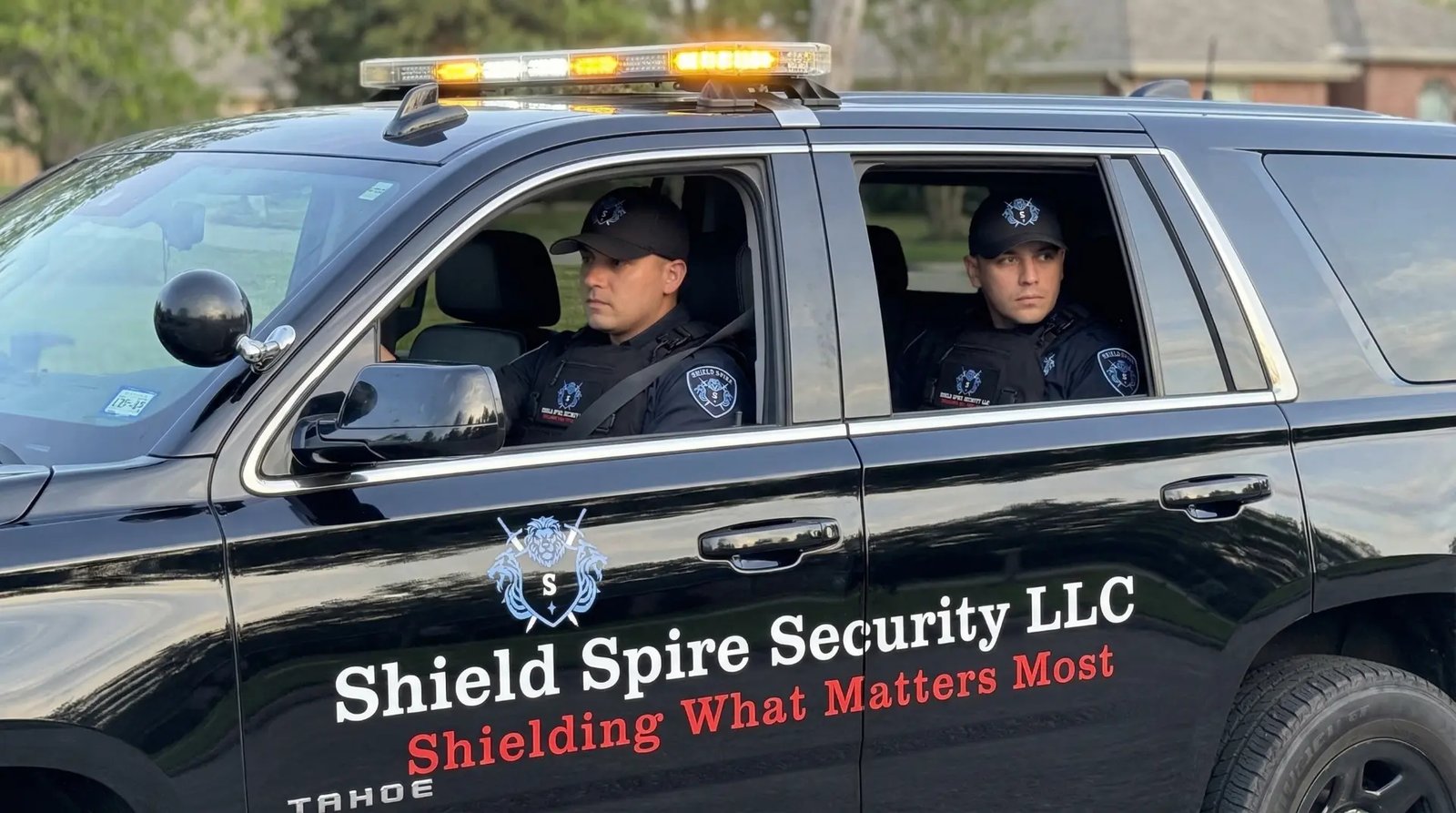
- Marked patrol passes through streets, common areas and parking on an irregular pattern
- Amenity checks timed to posted opening and closing hours
- Access observation for vendors, contractors and guests
- De-escalation first, with escalation to management and law enforcement
- Reporting written to be read by a board, not just filed
How a deployment is stood up
Shield Spire does not simply send an officer. Coverage is scoped, assigned, supervised and documented.
- Step 1
Walkthrough
A supervisor walks the community with your board or management to confirm gates, patrol routes, amenities and problem areas.
- Step 2
Scope
Post hours, patrol frequency and officer classification are set against the community's footprint and its actual complaints.
- Step 3
Assignment
Texas DPS licensed officers are assigned and briefed on the association's rules and escalation contacts.
- Step 4
Coverage
Officers hold the gate post and run patrol passes through streets, amenities and parking during the scheduled window.
- Step 5
Documentation
Patrol timing is GPS-verified and observations are captured in reports the board can present to residents.
- Step 6
Escalation
Anything requiring a decision reaches a supervisor and your management contact rather than waiting for the next meeting.
Services that fit this environment
Community scopes usually combine a dedicated residential service with the patrol pattern the footprint requires.
HOA & Residential Security
The community-specific scope: gate coverage, resident and guest access support, amenity checks and board-ready reporting.
Mobile Patrol
Marked patrol passes across a large footprint — usually the most cost-effective coverage for a community that cannot justify a continuous post.
Unarmed Security
The standard classification for a residential setting — visible, approachable and appropriate around residents and families.
What the board can show residents
The difference between a guard and a security operation is what exists after the shift. Shield Spire deployments are supported by Shield Spire Ops, the operations platform Shield Spire Security uses for scheduling and accountability: officer attendance is GPS-verified, patrol activity is captured in daily activity reports, incidents are documented in a structured format, and supervisors have visibility while the shift is still running — which is what turns a security line item into something a board can account for.
Where our residential experience stands
One completed overnight residential property security assignment in Austin is documented below. Shield Spire has not yet published an HOA deployment, so this page does not present that assignment as HOA experience.
Common questions
- Has Shield Spire worked with an HOA before?
- Not in a published HOA deployment. Shield Spire has completed one published overnight residential property assignment in Austin. The HOA capabilities described here, such as gate coverage, marked patrol, amenity checks and documented reporting, are ones the company delivers today in other environments, and we would rather say so than imply HOA experience we have not documented.
- Is patrol or a posted officer better value for a community?
- For most communities, scheduled patrol covers a large footprint at a fraction of the cost of a continuous post. A staffed gate makes sense where there is genuine access to manage. Many associations combine a gate post at peak hours with patrol overnight.
- Can officers enforce our covenants or issue parking citations?
- No. Officers observe and document, and they support the rules the association sets. Covenant enforcement, citations, towing decisions and resident discipline remain with the association and its management company.
- What does the board actually receive?
- GPS-verified patrol timing and written activity reports covering what was checked, when, and anything observed — written to be read in a board packet rather than filed unread.
- Do officers have authority over residents?
- No. Officers are not law enforcement and hold no authority over residents. Their role is presence, observation, de-escalation, documentation and escalation to management and to law enforcement.
Related environments
Properties with a similar access and after-hours profile.
Plan coverage for your community
Tell us the community, what residents are actually reporting and the hours that concern the board. A supervisor will walk it with you before anything is scoped.