Unarmed Security vs. Armed Security: Which Is Right for Your Business? (2026 Guide)
Learn the differences between unarmed and armed security services, when each is appropriate, and how Texas businesses can choose the right level of protection for their property, employees, and operations.
Shield Spire Security LLC
Shield Spire Security
Unarmed Security vs. Armed Security: Which Is Right for Your Business? (2026 Guide)
Selecting the right level of security is one of the most important decisions a business owner, property manager, or project superintendent can make. While many organizations recognize the need for professional security services, determining whether an unarmed or armed security officer is the appropriate choice requires a careful evaluation of operational risks, business objectives, and the environment being protected.
Contrary to common assumptions, armed security is not automatically the better option. Likewise, unarmed security should not be viewed as a lesser level of protection. Each serves a distinct purpose, and when deployed appropriately, both can significantly enhance safety, reduce liability, deter criminal activity, and support day-to-day business operations.
The decision should be based on a structured assessment of factors such as crime trends, public access, asset value, operating hours, cash handling, occupancy levels, previous incidents, and the responsibilities expected of security personnel.
Whether you manage a commercial office building, construction project, retail center, warehouse, apartment community, healthcare facility, industrial property, or corporate campus, understanding the differences between armed and unarmed security will help you make an informed decision that aligns with your organization's needs.
In this guide, we'll explain how both security models work, when each is appropriate, and what Texas businesses should consider before selecting a professional security provider.
Understanding Risk Before Choosing Security
One of the most common misconceptions is that every business requiring security also requires armed officers.
In reality, professional security begins with understanding risk—not with choosing equipment or uniforms.
An experienced security provider evaluates multiple factors before recommending a security solution. These include:
- The type of business and daily operations.
- Previous criminal activity at the property.
- The value of equipment, inventory, or other assets.
- Hours of operation.
- Public accessibility.
- Employee and visitor traffic.
- Local crime trends.
- Contractual or insurance requirements.
- The desired balance between customer service and security presence.
For many businesses, visible professional security alone provides an effective deterrent against theft, trespassing, vandalism, and unauthorized access. In higher-risk environments, however, additional defensive capabilities may be appropriate.
The goal is not to choose the highest level of security available—it is to choose the level that appropriately addresses the property's actual risks.
What Is Unarmed Security?
Unarmed security officers are licensed security professionals who provide protection, monitoring, access control, incident reporting, and customer assistance without carrying a firearm while performing their assigned duties.
Although they are not armed, professional unarmed officers play a critical role in preventing incidents through visibility, observation, communication, and early intervention.
Typical responsibilities include:
- Monitoring entrances and exits.
- Controlling visitor access.
- Verifying employee and contractor credentials.
- Conducting foot patrols.
- Monitoring surveillance systems.
- Reporting suspicious activity.
- Completing incident documentation.
- Assisting with emergency evacuations.
- Providing customer service and directions.
- Coordinating with property management and emergency responders when necessary.
In many commercial environments, the simple presence of a professional, uniformed security officer is enough to discourage criminal behavior while creating a safer environment for employees, customers, and visitors.
Because unarmed officers frequently interact with the public, strong communication skills, professionalism, and sound judgment are just as important as their security training.
Common Applications for Unarmed Security
Unarmed security is commonly selected for properties where deterrence, access control, and professional observation are the primary objectives.
Examples include:
- Corporate office buildings.
- Apartment communities.
- Homeowners associations.
- Retail shopping centers.
- Hotels.
- Educational campuses.
- Healthcare administrative facilities.
- Churches and places of worship.
- Warehouses.
- Manufacturing facilities.
- Distribution centers.
- Commercial business parks.
- Reception and concierge security.
- Construction projects with lower assessed risk.
These environments often benefit from a professional security presence without requiring officers to carry firearms during routine operations.
What Is Armed Security?
Armed security officers perform many of the same core responsibilities as unarmed officers but are additionally authorized to carry a firearm while on duty in accordance with applicable licensing requirements, company policies, and assignment-specific procedures.
Because of the additional responsibilities associated with carrying a firearm, armed officers typically receive more advanced training and are assigned to environments where the overall risk assessment indicates a greater need for enhanced protective capabilities.
Armed security is generally considered for properties that involve elevated threats, higher-value assets, increased exposure to violent crime, or contractual requirements that specifically call for armed personnel.
An armed officer's presence can provide an additional level of confidence for employees, clients, and property owners in situations where heightened security measures are appropriate.
However, carrying a firearm also requires greater responsibility, sound judgment, continuous training, and strict adherence to established policies and applicable laws.
For this reason, the decision to deploy armed security should always be based on a documented risk assessment rather than perception alone.
Common Applications for Armed Security
Armed security is frequently utilized in environments where the potential consequences of a serious security incident are significantly greater.
Examples include:
- Financial institutions.
- High-value construction projects.
- Critical infrastructure facilities.
- Government properties.
- Certain healthcare environments.
- Executive protection assignments.
- High-risk industrial facilities.
- Cash handling operations.
- Sensitive corporate facilities.
- Locations with documented violent crime concerns.
- Facilities storing high-value equipment or materials.
- Properties where armed security is contractually required.
Not every business operating in these sectors requires armed officers. The appropriate level of security depends on the property's unique operational risks and security objectives.
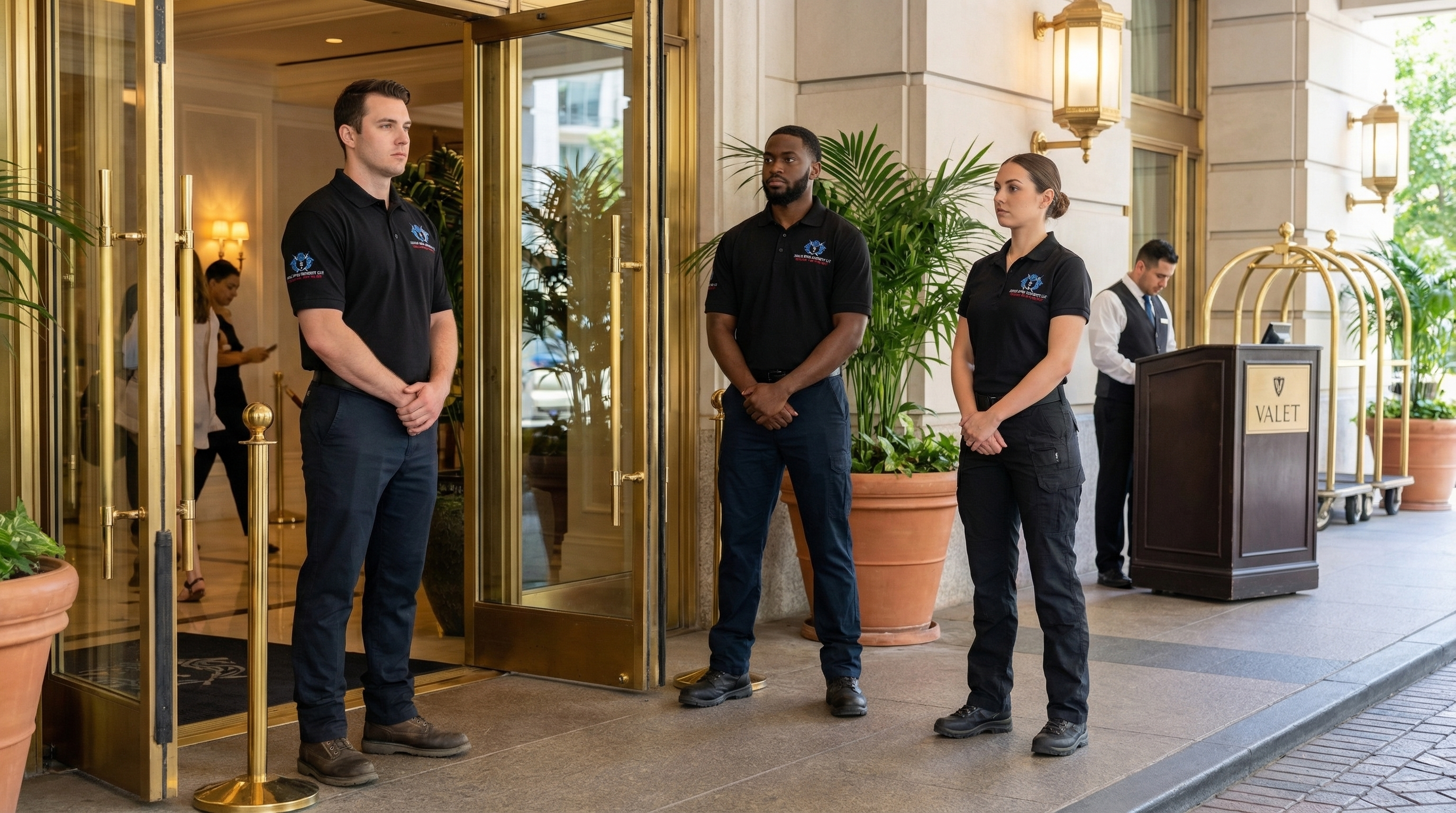
Professional unarmed security officers help businesses maintain safe environments through visible presence, access control, customer service, and proactive observation.
Key Differences Between Unarmed and Armed Security
While both unarmed and armed security officers share many of the same core responsibilities, their assignments, operational environments, and security objectives often differ.
The most significant distinction is not simply whether an officer carries a firearm. Rather, it is the level of risk the officer has been assigned to manage.
Both types of officers are expected to:
- Observe and report suspicious activity.
- Help deter criminal behavior.
- Protect people and property.
- Document incidents accurately.
- Respond appropriately to emergencies.
- Communicate with management and emergency responders.
- Maintain a professional and visible security presence.
The decision between unarmed and armed security should therefore be viewed as part of a broader security strategy rather than a comparison of one service being "better" than the other.
For many Texas businesses, a properly trained unarmed officer provides the appropriate level of protection. For others operating in higher-risk environments, armed security may represent the most suitable solution based on documented operational needs.
Benefits of Unarmed Security
For many organizations, professionally trained unarmed security officers provide an ideal combination of visibility, customer service, and incident prevention.
Some of the key advantages include:
Professional Customer Interaction
In environments where employees, customers, tenants, or visitors regularly interact with security personnel, unarmed officers often serve as both security professionals and representatives of the organization.
Their ability to provide directions, assist visitors, verify credentials, and maintain a welcoming yet professional presence contributes to a positive customer experience while supporting overall security objectives.
Strong Crime Deterrence
A uniformed security officer remains one of the most effective visible deterrents against opportunistic criminal activity.
Many incidents involving trespassing, vandalism, theft, or unauthorized access are prevented simply because offenders recognize that the property is actively monitored.
Cost-Effective Security
For businesses that do not face elevated security threats, unarmed officers often provide comprehensive protection while allowing organizations to manage security budgets efficiently.
This makes unarmed security an attractive option for office buildings, apartment communities, educational facilities, and many commercial properties.
Flexible Deployment
Unarmed officers can perform a wide variety of assignments including reception security, access control, patrol services, construction site monitoring, visitor management, and event security.
Benefits of Armed Security
Certain environments require a higher level of preparedness due to increased operational risks or contractual obligations.
In these situations, armed security provides several important advantages.
Enhanced Protection in Higher-Risk Environments
Properties handling high-value assets, sensitive information, or elevated public safety concerns may benefit from the additional capabilities provided by armed security officers.
Their presence can provide reassurance to employees, clients, and property owners when operating in environments with greater security risks.
Increased Deterrence
The presence of properly licensed and professionally trained armed security officers may discourage more serious criminal activity at locations considered attractive targets.
While deterrence alone should never be the sole reason for selecting armed security, it remains an important component of an overall security strategy.
Specialized Assignments
Armed officers are commonly assigned to executive protection details, critical infrastructure, financial institutions, sensitive government facilities, and locations requiring enhanced security measures.
These assignments often demand advanced situational awareness, sound judgment, and the ability to operate within clearly defined procedures.
Support During Critical Incidents
Professional armed officers receive additional training related to decision-making, incident response, and safety procedures appropriate to their assignments.
Their role is not simply to carry a firearm—it is to exercise disciplined judgment while helping protect people and property during high-risk situations.
Which Option Is Right for Your Business?
Choosing between unarmed and armed security should never be based solely on perception or appearance.
Instead, businesses should evaluate their operational risks and security objectives.
Unarmed Security May Be Appropriate If:
- Your property primarily requires access control.
- Customer service is an important part of the assignment.
- Crime levels are relatively low.
- The primary objective is deterrence and observation.
- Employees and visitors regularly interact with security personnel.
- You need routine patrols and incident reporting.
Armed Security May Be Appropriate If:
- Your property has experienced significant criminal activity.
- High-value assets require additional protection.
- Cash handling presents elevated risks.
- Executive protection services are required.
- Contractual requirements specify armed officers.
- A documented security assessment identifies increased threats.
The appropriate recommendation should always be based on the specific characteristics of the property rather than assumptions or general preferences.
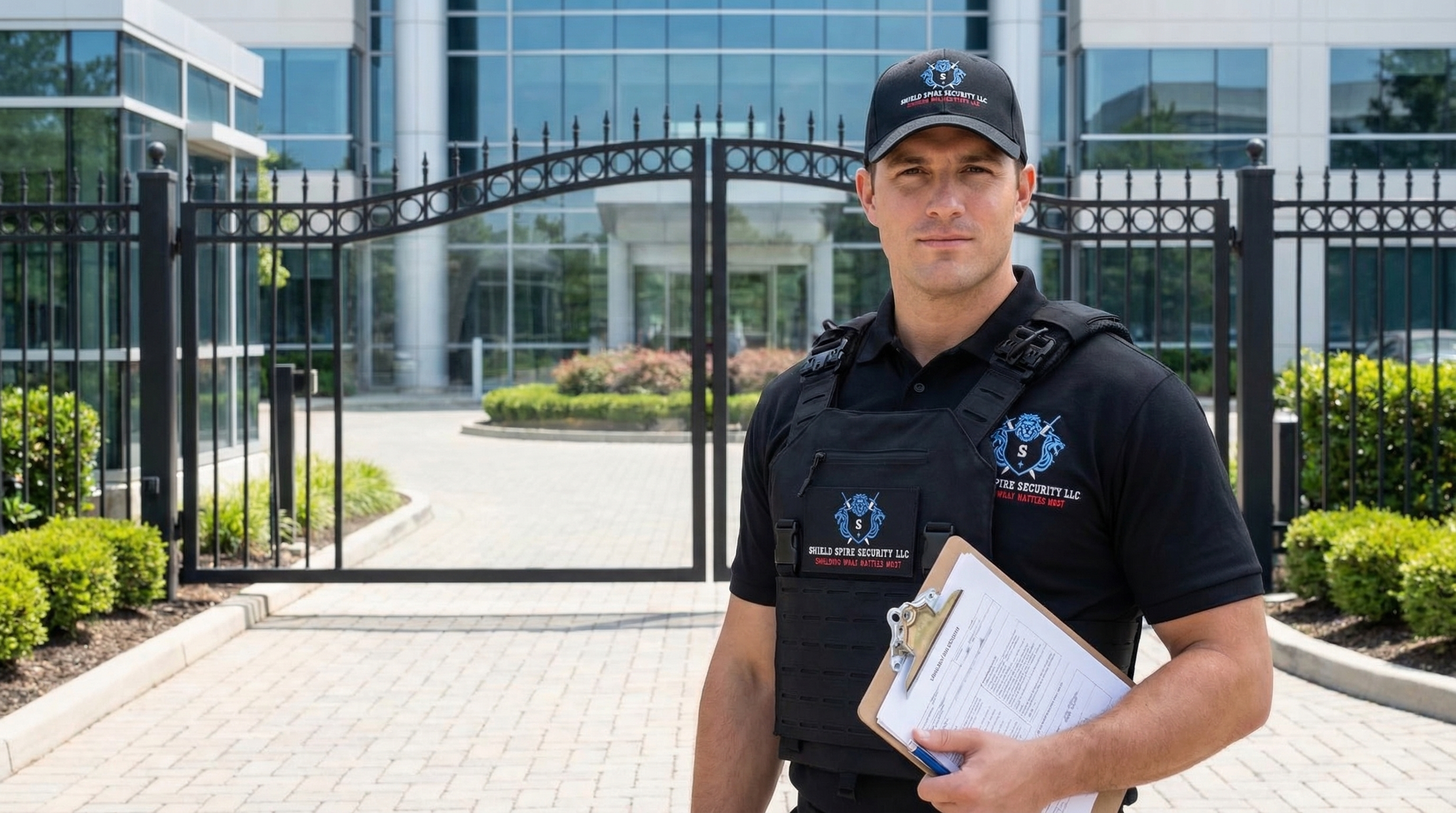
Professionally trained armed security officers provide enhanced protection for higher-risk environments where operational needs require an elevated level of security.
Common Mistakes Businesses Make
Businesses sometimes select security services based on assumptions rather than conducting a thoughtful assessment of their actual needs.
Some common mistakes include:
Assuming Armed Security Is Always Better
A higher level of visible security is not always the most appropriate solution. For many organizations, professionally trained unarmed officers effectively address operational risks while providing a welcoming environment for employees and visitors.
Focusing Only on Cost
Selecting a security provider solely because they offer the lowest price can lead to inconsistent service, inadequate reporting, or officers who are not the right fit for the assignment.
Security should be evaluated based on value, professionalism, training, and reliability.
Not Conducting a Risk Assessment
Every property is different. A construction project, office building, healthcare facility, and apartment community each require different security strategies.
Professional security recommendations should always begin with understanding the property's specific risks.
Frequently Asked Questions
Is armed security required for every business?
No. Many businesses successfully protect their employees and property with professional unarmed security. The appropriate solution depends on the property's unique operational risks.
Are unarmed security officers licensed in Texas?
Yes. Security officers performing regulated security services in Texas must meet applicable licensing requirements established under state law and operate through licensed security companies.
Does armed security reduce liability?
The relationship between security measures and liability depends on many factors, including training, supervision, policies, and the specific circumstances of an incident. Businesses should evaluate security needs through a comprehensive risk assessment rather than assuming one approach automatically reduces liability.
Which option is more cost-effective?
Unarmed security services are generally less expensive than armed security because of the additional qualifications, training, and responsibilities associated with armed assignments. However, cost should be considered alongside the property's actual security requirements.
Can businesses combine both services?
Yes. Many organizations use a combination of unarmed and armed security depending on operating hours, special events, construction phases, or changing security conditions.
How do I know which service my property needs?
A professional security assessment is the best way to determine the appropriate level of protection. An experienced security provider can evaluate your property's risks, operational needs, and objectives before recommending a customized solution.
Why Choose Shield Spire Security?
At Shield Spire Security, we believe effective security begins with understanding your business—not applying the same solution to every client.
Our team works closely with property owners, business leaders, contractors, and facility managers to evaluate operational risks and recommend security services that align with their specific needs.
Whether your property is best served by professional unarmed officers, licensed armed officers, mobile patrol services, fire watch personnel, or a combination of security solutions, our goal is to deliver dependable protection supported by professionalism, accountability, and responsive communication.
Every assignment is approached with careful planning, experienced supervision, and a commitment to protecting people, property, and business operations throughout Texas.
Conclusion
There is no universal answer to the question of whether unarmed or armed security is the better choice.
The most effective security program is the one that matches the property's actual risks, operational environment, and business objectives.
Many organizations achieve excellent results through professionally trained unarmed officers, while others require the enhanced capabilities of armed security due to the nature of their operations.
By evaluating risk carefully and working with an experienced security provider, businesses can implement a security program that supports safety, operational continuity, and long-term peace of mind.
Find the Right Security Solution for Your Business
Every property has unique security requirements, and selecting the appropriate level of protection begins with understanding those needs.
Whether you're evaluating unarmed security, armed security, mobile patrol services, fire watch coverage, or a comprehensive security program, Shield Spire Security can help you identify the solution that best supports your business.
Contact Shield Spire Security today to discuss your property's security objectives and learn how our experienced team can develop a customized protection plan for your organization anywhere in Texas.
Key Takeaways
This article provides comprehensive insights into business security practices. For customized security solutions tailored to your specific needs, contact our team of experts.
Related Articles
Access Control Security Services in Texas: Complete Business Guide (2026)
Professional access control security services help Texas businesses protect employees, visitors, and valuable assets by managing who enters and exits their facilities. Learn how trained access control officers improve workplace safety, reduce security risks, and support daily operations across commercial properties.
Read MoreMobile Patrol Security Services: Benefits for Texas Businesses (2026 Guide)
Discover how mobile patrol security services help Texas businesses reduce crime, deter theft, improve property protection, and provide a cost-effective alternative to full-time on-site security guards.
Read MoreFire Watch Services in Texas: When Are They Required? (2026 Complete Guide)
Learn when fire watch services are required in Texas, who needs them, what trained fire watch officers do, and how businesses can remain compliant while protecting occupants and property during fire protection system outages.
Read MoreReady to Enhance Your Security?
Contact us today for a free consultation and quote on professional security services.